How to Add a Video to PowerPoint (2026 Guide)
To add a video to PowerPoint, open the slide, click Insert, then Video, and choose This Device for a file on your computer or Online Videos to paste a YouTube link. Resize it, then use the Playback tab to set it to start automatically or on click, play full screen, and trim. Full steps are below for both methods, how to embed an online video, how to save the whole deck as a video, and what to do when a video will not play.
This video was made with Velo. No editing, no retakes.
Try it freeHow to add a video to PowerPoint from your computer
- Open the slide and go to the Insert tab.
- Click Video, then This Device.
- Choose your MP4 and click Insert. The video embeds directly in the file.
- Drag the corners to resize and position it.
- Open the Playback tab to set Start to Automatically or On Click, tick Play Full Screen if you want, and use Trim Video to cut the start and end.
Embedding a file keeps the video inside the deck, so it travels with the presentation. This is the same as inserting or putting a video on a slide.
How to embed a YouTube video in PowerPoint
- On the Insert tab, click Video, then Online Videos.
- Paste the YouTube link and click Insert. You can also paste an embed code if you have one.
- Resize and position the frame.
Online videos stream at play time, so you need an internet connection during the presentation, and the video must stay public or unlisted to keep working. This covers embedding and inserting a YouTube video.
How to make a video autoplay, loop, play full screen, or trim
Select the video and open the Playback tab. Set Start to Automatically for hands-free playback, tick Loop until Stopped to repeat it, tick Play Full Screen for a cinematic view, and use Trim Video to set the exact start and end points.
How to save a PowerPoint as a video
To turn the whole deck into a single video file, go to File, then Export, then Create a Video. Choose a resolution, confirm Use Recorded Timings and Narrations if you have them, and click Create Video to save an MP4. This is how you convert a PowerPoint to video so it plays anywhere without PowerPoint installed.
Why won’t my video play in PowerPoint?
Two common causes: an embedded YouTube video needs an internet connection and a public or unlisted link, and a very large embedded file can make the deck slow or fail to email. If playback fails, check your connection, confirm the online video is still available, or compress the media under File, then Info, then Compress Media.
A faster way: turn the whole deck into a video
Adding one clip is simple. When you want the entire deck to become a single narrated video you can share as a link, this is where Velo comes in:
- Point Velo at your PowerPoint, or turn the document into a video.
- Velo writes a script, narrates the deck in your own voice, and adds captions. You can drop in a polished screen recording for any live demo.
- Need a change? Edit the script and regenerate. No re-recording.
- Share one link or MP4 that plays anywhere. For more options, see our guide on turning PowerPoint into video.
You build the deck once. Velo turns it into a video worth sending.
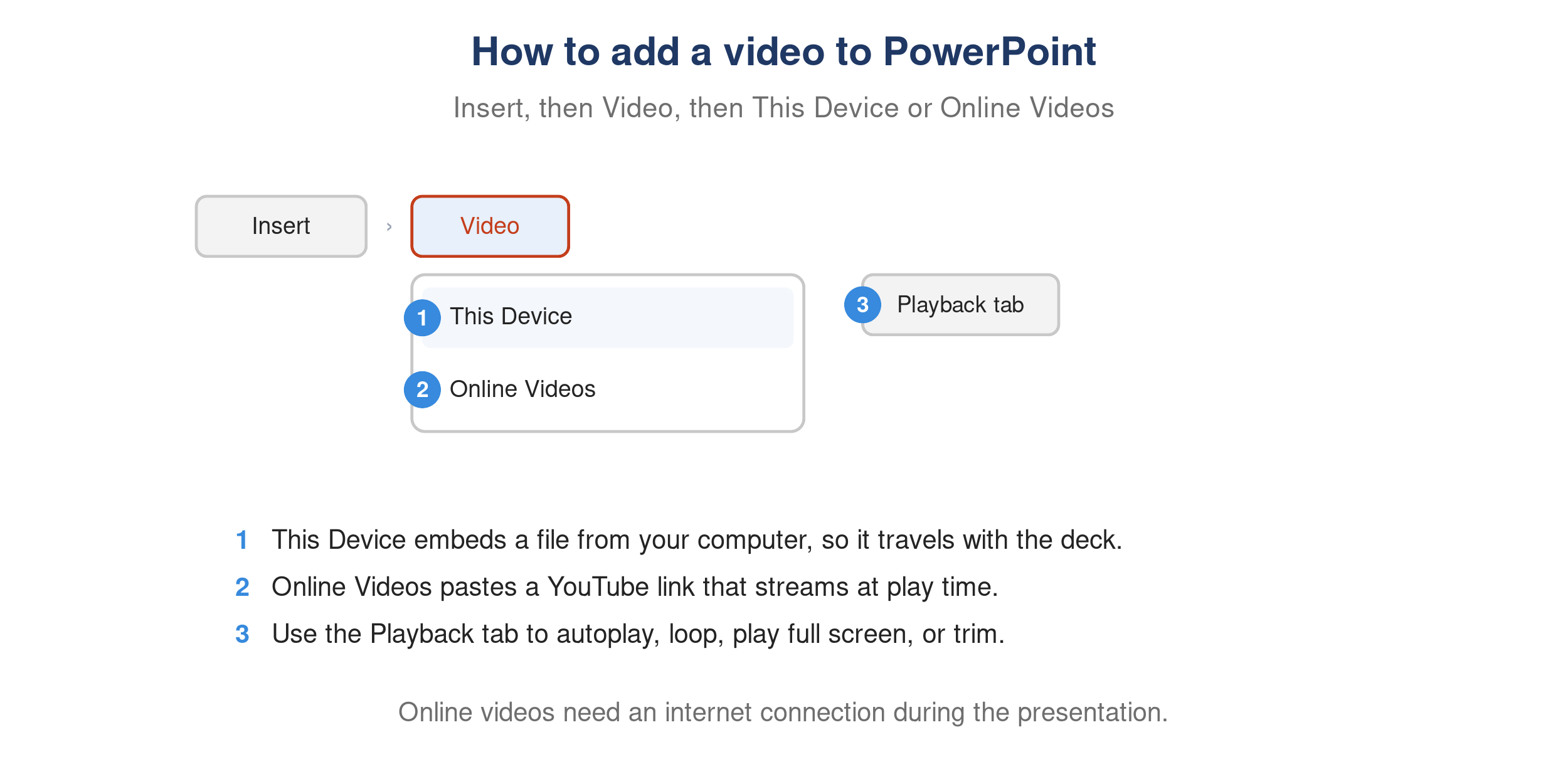
Inserting a video in PowerPoint from This Device or Online Videos.